The Amman Arab University (AAU) Explores Enhancing Training and Research Cooperation with the Royal Jordanian Geographic Center
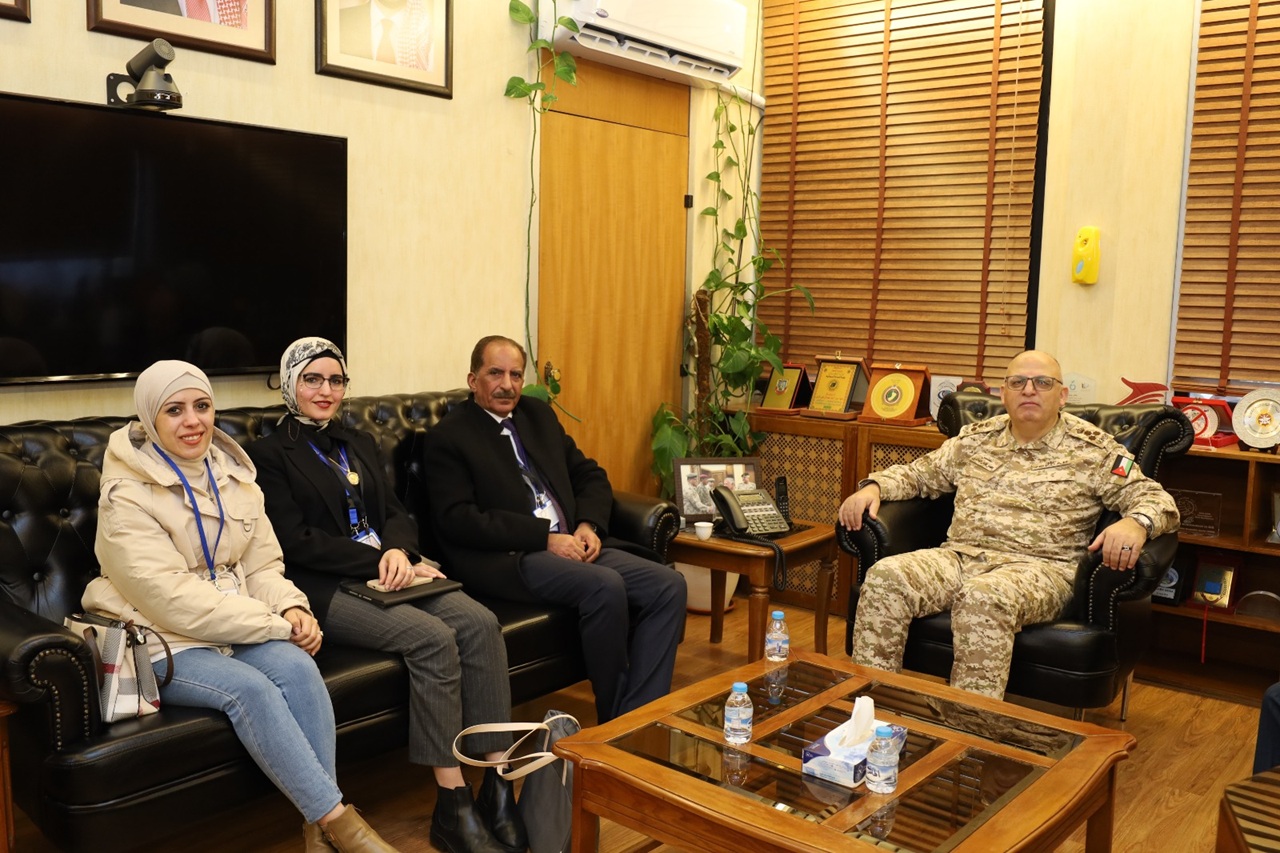
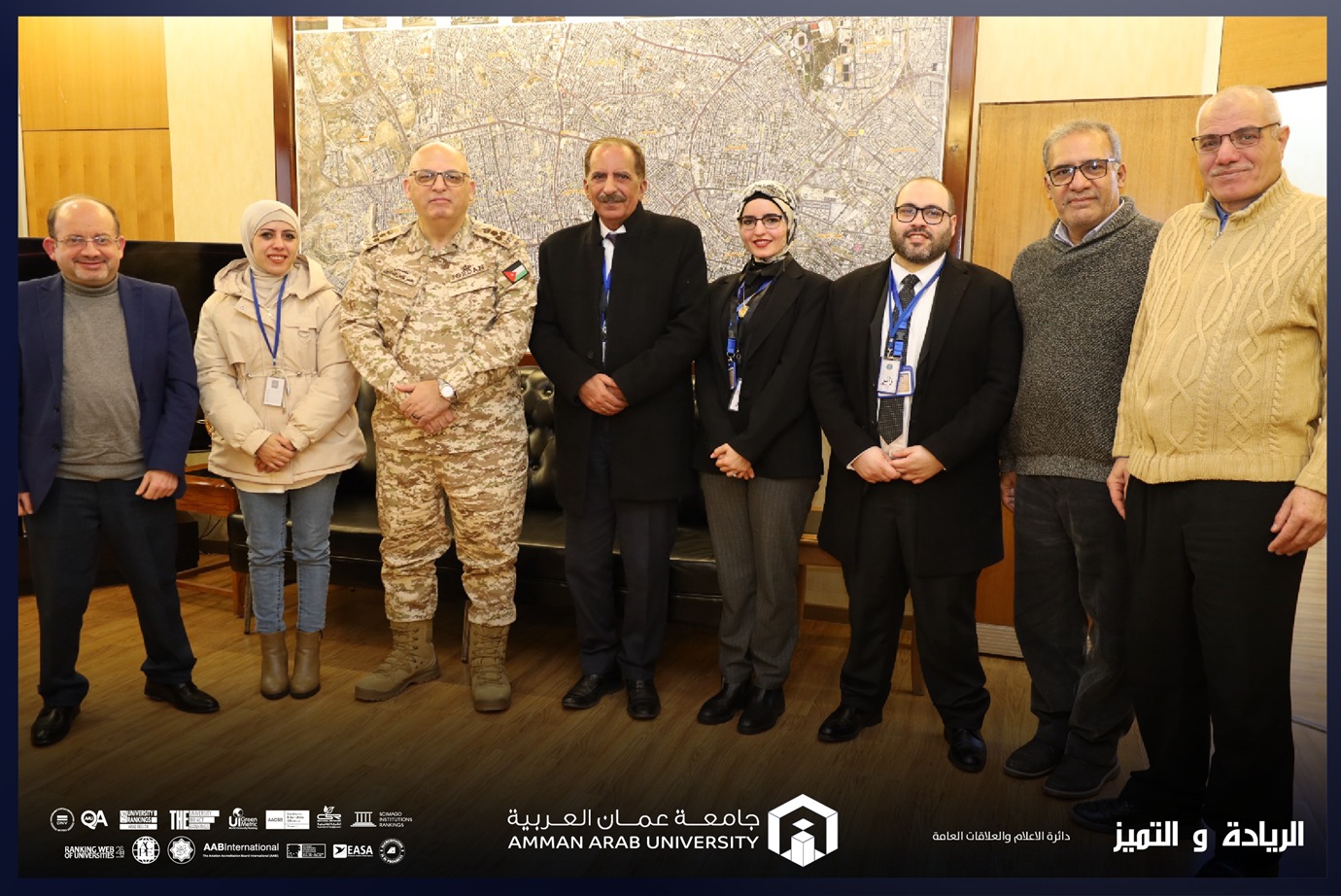
Engineer Muammar Kamel Haddadin, Director General of the Royal Jordanian Geographic Center, received a delegation from Amman Arab University headed by Dr. Anwar Al-Assaf, Dean of the Faculty of Engineering. The delegation also included Dr. Reham Al-Asmar, Head of the Department of Architecture; Ms. Mai Jaradat, Director of the Consultancy and Training Center; and Dr. Kamal Haddad, faculty member at the Faculty of Engineering. The meeting was attended by Dr. Hanna Sabbat, Director of Scientific Affairs and Training; Dr. Ammar Al-Sukaji, Head of Scientific Affairs; and Dr. Qais Al-Omari, Head of the Training Department at the Royal Jordanian Geographic Center.
The visit comes within the framework of strengthening scientific and research collaboration between Amman Arab University and national institutions. It aimed to enhance cooperation in the field of training and to establish an effective partnership between the Faculty of Engineering at the university and the Royal Jordanian Geographic Center. This partnership seeks to facilitate the exchange of scientific expertise, support joint research projects, and provide distinguished training and academic opportunities for students in the fields of engineering, urban planning, meteorology, and geographic surveying.
In this context, Dr. Al-Assaf stated that the visit aimed to explore the advanced capabilities and services provided by the Royal Jordanian Geographic Center and to discuss several key areas and recommendations intended to strengthen future cooperation. These include developing joint training programs for university students in Geographic Information Systems (GIS) and Global Navigation Satellite Systems (GNSS), as well as implementing joint research projects that promote innovation in urban design and environmental sustainability. He also emphasized the importance of exchanging scientific and technical expertise between faculty members and the Center’s specialists, and organizing joint workshops and scientific seminars to introduce students to the latest technologies and applications in geography and engineering.
Dr. Al-Assaf stressed the importance of this strategic partnership with the Royal Jordanian Geographic Center, highlighting its direct impact on enhancing students’ practical experience and bridging the gap between academic study and practical application. He noted that such collaboration contributes to preparing qualified engineering professionals capable of meeting labor market demands. He further underscored that this partnership reinforces the university’s role in serving the community and the national sector, supports its openness toward leading national institutions, and promotes the application of academic knowledge to sustainable development issues.
For his part, Engineer Haddadin emphasized the importance of strengthening cooperation with Amman Arab University, affirming that the Royal Jordanian Geographic Center places special emphasis on building strategic partnerships with academic institutions, in line with its national role in supporting scientific research and technological development. He explained that the Center possesses advanced infrastructure and specialized technical expertise in Geographic Information Systems, aerial and terrestrial surveying, and meteorology, and is ready to dedicate these capabilities to serving students and researchers. This, he noted, would enhance their practical competence and applied skills. He also stressed the importance of utilizing modern technology and accurate geospatial data to support development and sustainable planning projects, indicating that cooperation with the university represents an important step toward preparing a new generation of engineers capable of working with the latest globally adopted technologies and systems, thereby strengthening integration between the academic sector and specialized national institutions.